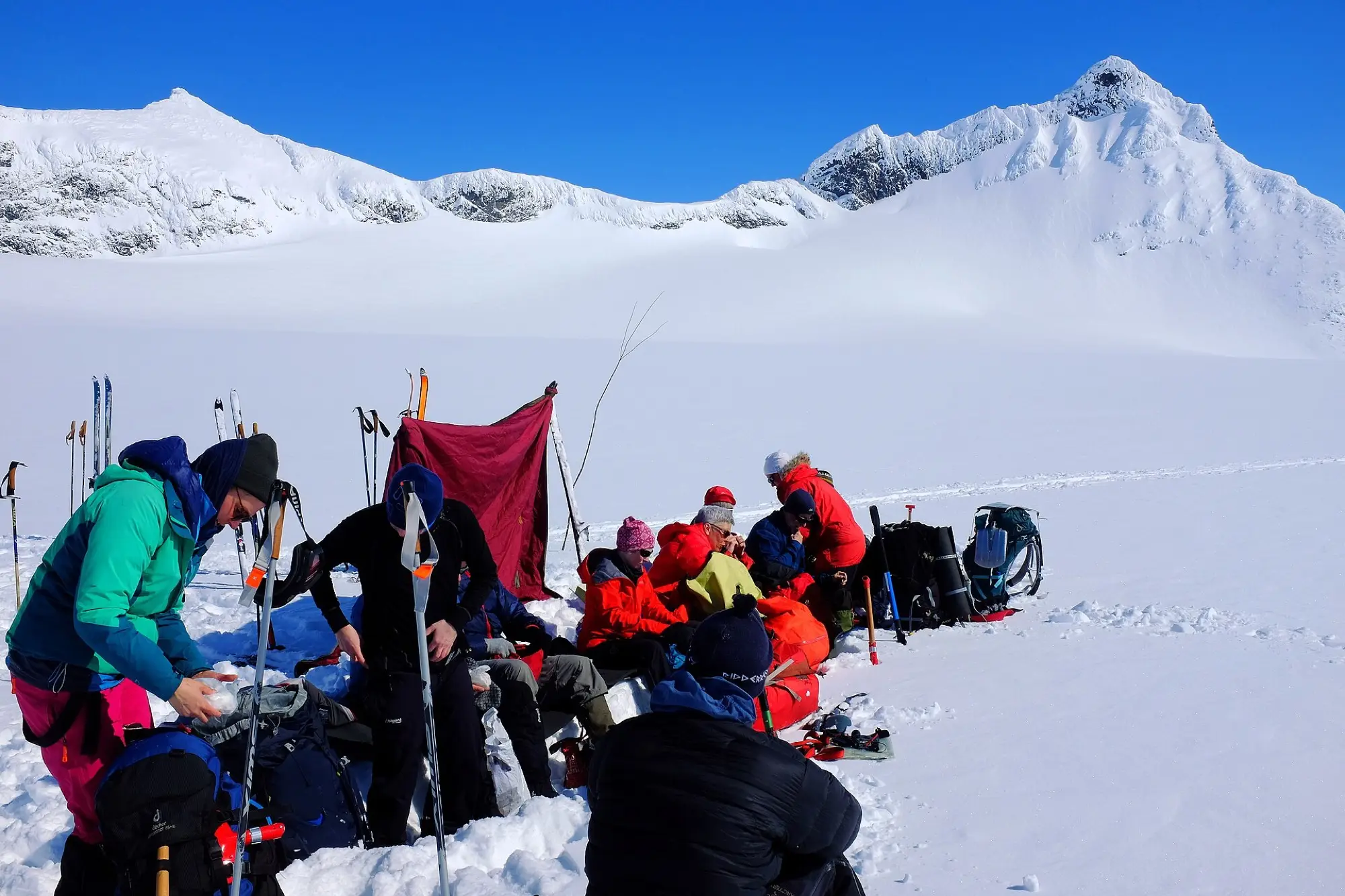

In 2027 the Easter holidays run from Maundy Thursday 25 March to Easter Monday 29 March. Maundy Thursday, Good Friday, Easter Day and Easter Monday are public holidays when shops must stay closed, and on Easter Eve, Saturday 27 March, they close at 16:00. Many Norwegians go to a cabin or the mountains to ski, and read or watch crime stories (påskekrim).
When Easter falls in 2027
Under the Public Holidays Act (helligdagsfredloven), Maundy Thursday (skjærtorsdag), Good Friday (langfredag), Easter Day (første påskedag) and Easter Monday (andre påskedag) are public holidays. According to the act on Lovdata, Easter Day is set as the first Sunday after the first full moon on or after 21 March. Maundy Thursday and Good Friday are the last Thursday and Friday before it, and Easter Monday is the Monday after.
In 2027 Maundy Thursday is Thursday 25 March, Good Friday is Friday 26 March, Easter Eve (påskeaften) is Saturday 27 March, Easter Day is Sunday 28 March, and Easter Monday is Monday 29 March. Store norske leksikon notes that Easter Day can fall no earlier than 22 March and no later than 25 April in the western calendar; its table gives 28 March for 2027 and 16 April for 2028. You can see the full calendar on our guide to public holidays in Norway.
For families in the capital, Oslo's public schools have their Easter holidays from Monday 22 March to Tuesday 30 March 2027. Store norske leksikon states that Easter is known in Norway as the longest public holiday of the spring half of the year, marking the line between winter and spring in much of the country.
What Easter means in Norway
Store norske leksikon explains that Easter in Norway is often associated with cabin holidays and ski trips, påskekrim, and a lot of cultural events in the cities. Lille norske leksikon adds that many people also link Easter with Easter eggs filled with sweets and oranges.
Everyday symbols include daffodils (påskeliljer) and other yellow flowers, willow catkins (gåsunger), yellow chicks and Easter eggs. Lamb is the typical Easter food. Store norske leksikon sums up what many Norwegians link with a traditional outdoor Easter as high mountains, a ski trip, fine weather and an orange in the sun against a cabin wall (appelsin i solveggen).
A hytte (cabin) is a Norwegian term traditionally used for a small building, in the mountains, by the sea or in forest and field, meant for short stays with few or no modern comforts. According to Store norske leksikon, cabins became a mass phenomenon in Norway in the 1960s.
What is closed over Easter, and what stays open
On public holidays, fixed shops that sell to consumers must stay closed. On Christmas Eve, Easter Eve and Whitsun Eve they must close at 16:00.
Under the law, this closing rule does not apply to:
- Shops selling mainly kiosk goods or groceries with a sales area of no more than 100 square metres
- Petrol stations of no more than 150 square metres
- Shops on campsites in the camping season
- Restaurants and cafés
- Garden shops
- Shops selling mainly local crafts and souvenirs
- Duty-free shops in airport terminals
- Shops in areas designated as typical tourist places by the county governor (statsforvalteren), for all or part of the year, where sales go mainly to tourists
The act protects the "holiday peace" (helligdagsfred) on public holidays and on the afternoons of Easter Eve, Whitsun Eve and Christmas Eve, which no one may disturb with undue noise. On public holidays, public entertainments, shows and sports competitions may not be held between 06:00 and 13:00, though events run by religious and belief communities and art, science or educational exhibitions are exempt.
Alcohol sales in supermarkets face extra limits. Shops may not sell beer and other drinks of up to 4.7% alcohol after 18:00 on the day before a Sunday or public holiday. Beer may not be sold on Sundays and public holidays.
Buying wine and spirits before the holidays
State-run alcohol outlets operate under separate statutory hours, explained in detail on our Vinmonopolet page. Vinmonopolet may not sell on Sundays and public holidays, meaning its shops are closed from Maundy Thursday to Easter Monday except on Easter Eve.
On the day before a Sunday or public holiday, Vinmonopolet may sell only between 10:00 and 16:00. The Directorate of Health notes that Vinmonopolet may open on Easter Eve but is not required to by law, so some of its shops can be closed on Easter Eve. Vinmonopolet also states that its opening hours may differ around Christmas, Whitsun and Easter.
Buses, trams and boats on the holidays
Each transport operator sets its own Easter timetables. At Easter 2026 Ruter, Oslo's public transport company, ran a reduced holiday timetable from 30 March to 6 April because many people are on holiday and pupils are not at school. During that week the metro ran every 15 minutes on all lines, and the trams ran every 15 minutes on all lines during the day. Buses had fewer departures, especially in the rush hour, and some routes were suspended for the whole of Easter. Easter also starts the season for several of Ruter's boat routes; in 2026 the boat from Aker Brygge to Drøbak and Son ran from 27 March. Ruter tells everyone to check the journey planner at ruter.no or in the Ruter app before travelling.
In Rogaland around Stavanger, Kolumbus runs Saturday timetables on the Wednesday before Easter in South Rogaland and Haugalandet. On Maundy Thursday and Good Friday its buses run Sunday timetables. On Easter Eve they run Saturday timetables. On Easter Sunday and Easter Monday they run Sunday timetables, and departures marked yellow in the timetables do not run in the school holiday, which at Easter 2026 was 28 March to 4 April 2026.
If you plan on driving in Norway to the mountains at Easter, winter rules still apply: from 1 November to the first Sunday after Easter Monday, tyres must have a tread of at least 3 mm.
Påskekrim, crime fiction for the Easter holidays
Store norske leksikon calls påskekrim a peculiarly Norwegian phenomenon in which crime stories of all kinds are tied closely to Easter. Crime novels are published and marketed especially before Easter, and TV channels, radio and streaming services show crime series.
The tradition is usually traced back to the 1923 thriller Bergenstoget plyndret inat! (The Bergen train robbed tonight!), written by Nordahl Grieg and Nils Lie under the pen name Jonathan Jerv. The story is set on Easter Day, which that year was also 1 April, in the Easter mountains (påskefjellet) at Haugastøl. Aftenposten carried the headline on its front page on 24 March 1923. The publisher marketed the book with an advertisement that made it look as though the train really had been robbed.
The habit of reading crime at the Easter cabin is why so many crime novels come out early in the year in Norway, a different launch window from other fiction, which tends to come out in autumn for the Christmas trade. In 1976 the broadcaster NRK first showed crime on Maundy Thursday and Good Friday, and it has been an unbroken tradition since. NRK's Easter crime has mostly been adaptations of detective novels, and Adam Dalgliesh, from P. D. James's books, was its Easter crime seven times between 1984 and 2010. TV 2 followed the tradition soon after it started in the early 1990s, and in the 2020s many streaming services launch crime series for Easter. The word itself took off in the 2000s: the Retriever newspaper archive finds it five times in 1980, 105 times in 2000 and 1194 times in 2010.
In the capital, Norsk Folkemuseum puts on an Easter crime mystery and family activities during the holiday.
The mystery on the milk carton
The dairy cooperative Tine has printed an Easter crime mystery on its milk cartons every Easter since 1997. The stories have been written by well-known authors including Unni Lindell, Jon Michelet, Anne Holt, Jo Nesbø, Tom Egeland, Kim Småge and Erlend Loe, and hundreds of thousands of people have sent in their answers.
From 2011 the author Gunnar Staalesen and the illustrator Arild Midthun made the carton mysteries, featuring the detective Ulf Ulvheim. The year before its 2022 return the mystery was left off the cartons, and Tine had so many reactions that it brought it back in 2022, written by Bobbie Peers and drawn by Sandra Steffensen. In 2022 Tine also printed a Nynorsk version of the mystery, for the first time, on its kulturmjølk cartons.
At Easter 2026 you could guess the solution to the mystery on Tine's milk cartons from 3 March to 4 April 2026 and enter a draw for cinema gift cards; the solution was revealed on Easter Eve, 4 April 2026, after 10:00. For the 30th year of the milk-carton crime, Tine collected some of its best Easter mysteries in a booklet on its website.
The cabin, the ski trip and DNT's Easter lodges
DNT states that some staffed lodges open from the end of February until well into May, but most open on the Friday before Palm Sunday and close again on Easter Monday. In 2027 Palm Sunday is 21 March, so most staffed lodges that open for Easter will be open from Friday 19 March to Easter Monday 29 March 2027. Detailed booking processes are covered on our DNT cabins page.
Booking is mandatory at some staffed lodges, and at the busiest cabins a warden often helps sort out beds in the high season of Easter and summer. There are no groomed ski tracks in the high mountains; winter routes are marked with branches or poles, and most are marked only until Easter. Most self-service and no-service cabins are open all year, but those in Jotunheimen, Skarvheimen, Hardangervidda and some other mountain areas close from 15 October until mid-February or early March.
If you stay closer to the cities, the Skimore ski slopes at Tryvann in Oslo are 30 minutes from the city centre by car or metro, and the season usually runs from November or December until Easter. In Bergen, the Ulriken cable car is open 09:00 - 19:00 over Easter 2027, from 25 to 29 March.
Oranges and Kvikk Lunsj in the rucksack
Beside the orange in the sun against a cabin wall, Lille norske leksikon lists oranges among the things many people link with Easter.
Kvikk Lunsj is a Norwegian chocolate-covered biscuit bar from Freia, launched in 1937 as ideal trip and reserve food, shaped to fit the pocket of the anorak, which was then the newest sports garment. According to Freia it was even said to have the same food value as one egg and two slices of bread and butter. Freia calls it the whole of Norway's trip chocolate and notes that the mountain code was later printed on the wrapper, which has since carried hiking tips, sights and information about DNT's cabins. Store norske leksikon notes that it has long been marketed as a "trip chocolate" (tursjokolade). Freia halted production between 1941 and 1949; when Oslo hosted the 1952 Winter Olympics, 10 million Kvikk Lunsj were sold.
The mountain code and the avalanche warnings
The first mountain code (fjellvettreglene) came in 1952, written by DNT and the Norwegian Red Cross after several deaths in the Easter mountains two years earlier. At Easter 1967, 17 people died in the mountains, mainly because of a sudden change to storm winds and heavy snow or rain and because many were poorly dressed and equipped. The big campaigns that followed made the code widely known. A revised version of the code was launched on 15 February 2016, with special weight on avalanches.
DNT's nine rules start with planning the trip and saying where you are going, adapting it to ability and conditions, and heeding the weather and avalanche forecasts; they end with turning back in time, because there is no shame in turning round. You can read the rules in full on our safety guide. On a winter trip, carry a wind shelter (vindsekk), sleeping mat, sleeping bag and shovel so you could survive an unplanned night out, plus a reflective vest or headlamp to help rescuers find you.
The mountain code states that avalanches can release on slopes higher than 5 metres and steeper than 30 degrees, can run three times as far as the height of the slope, and can be triggered from flat ground below a mountainside. In avalanche terrain always carry an avalanche transceiver, a probe and a shovel. Mobile phones may have no coverage in the mountains; after an accident, notify the police on 112, go for help or raise the alarm some other way.
The Norwegian Avalanche Warning Service at varsom.no publishes regional avalanche warnings before 4 p.m. every day from 1 December to 31 May, covering the Easter period. The danger scale runs from 1 (low) to 5 (very high). At level 3, considerable, triggering is possible even from a low additional load, such as a single skier or snowshoer, on the steep slopes named in the bulletin. Varsom cautions that a warning is a planning tool, regional and based on forecasts, that may differ from the real situation, so you must always make your own evaluation.
Easter in Sápmi, the Sámi Easter festival
Easter has long been a time to meet on the Finnmark plateau, before the reindeer herds start their spring move, and it has grown into Easter festivals in both Kautokeino and Karasjok. You can learn more about these communities in our guide to Sámi culture in Norway.
The Sámi Easter festival is held in Kautokeino every year during Easter week. Its programme includes concerts, reindeer racing, exhibitions, theatre, a duodji (handicraft) market, outdoor activities and the Sámi Grand Prix, with both traditional joik and modern Sámi music. The festival's 2027 programme had not been announced when this page was checked.