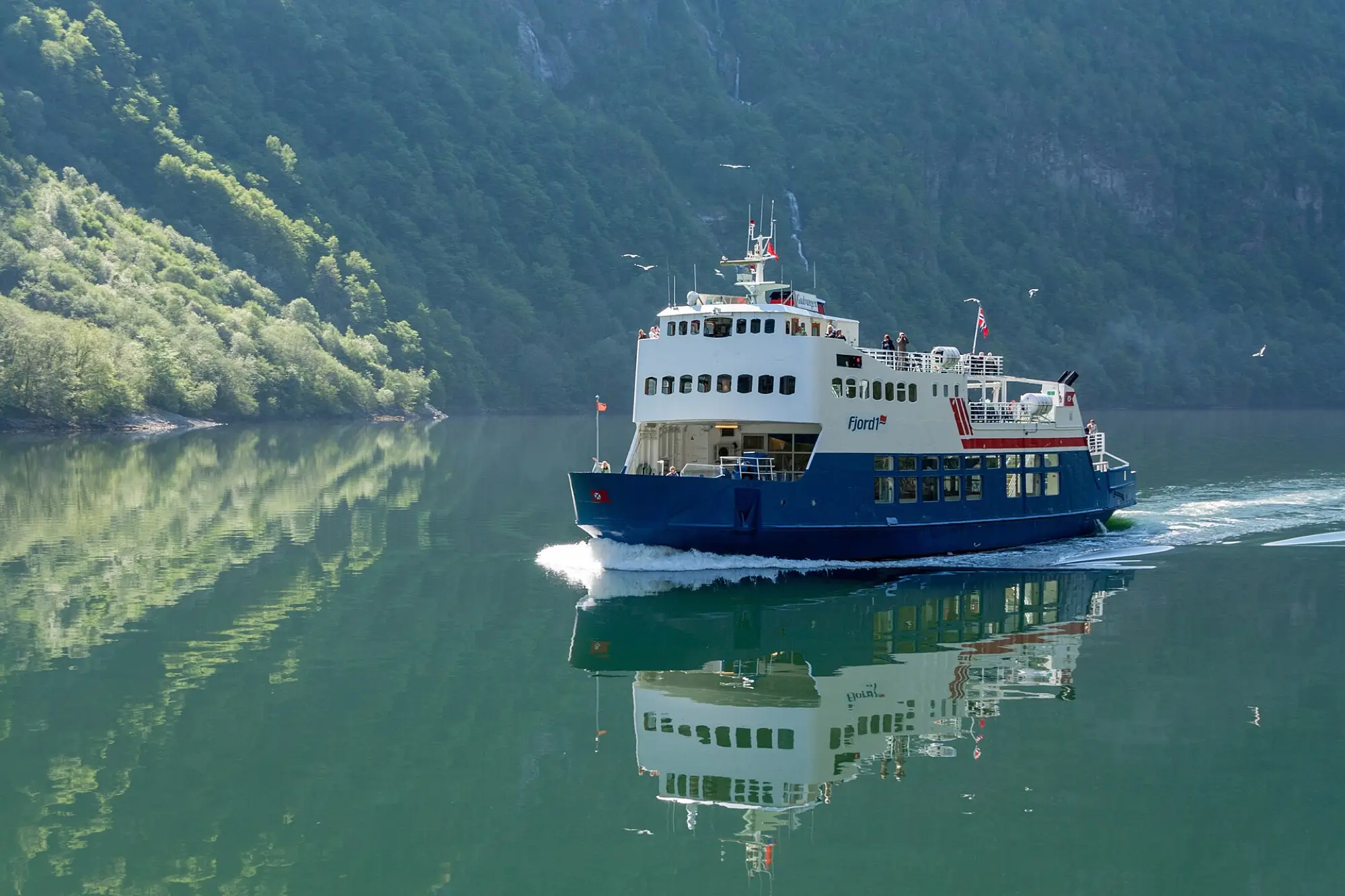

This 7-day plan travels from Oslo to Bergen using the train, a fjord boat and a connecting bus, with no car required. You spend two nights in Oslo, take the Bergen Line and Flåm Railway into the fjords, cross the Nærøyfjord to Gudvangen, and continue by bus and rail to Bergen. Adding three days in the north creates a 10-day route, flying to Tromsø in winter or Lofoten in summer.
The plan at a glance, and why it works without a car
This itinerary is built on a 7-day core route between Oslo and Bergen, which expands into a 10-day journey by adding three days in northern Norway. The 7-day version covers six nights: two nights in Oslo, one night in Flåm, and three nights in Bergen. The 10-day plan adds three nights in either Tromsø or Lofoten, making nine nights in all.
Days 1 to 7 follow the classic transit corridor between Norway's two largest cities. Much of this segment mirrors the route used by Norway in a Nutshell, which is a self-guided tour with no guide. It can take one day or several, running in either direction between Oslo and Bergen, or as a round trip out of Bergen. The transit links the mainline railway to Myrdal, the branch railway down to Flåm, a passenger vessel along the fjord to Gudvangen, a connecting coach to Voss, and the regional train into Bergen.
Trains between Oslo and Bergen take 6.5 to 7.5 hours, with both day and night options requiring roughly the same transit time depending on the season and scheduled stops. There is no railway line to Tromsø; the nearest passenger stations on the network are Fauske and Narvik. Hurtigruten and Havila operate coastal voyages all year between Bergen and Kirkenes, calling at Tromsø twice each day, but the voyage north from Bergen takes around 64 hours. For a 10-day timeline, flying north from Bergen is the practical choice.
Arriving and leaving by air
At Oslo Airport, the train into the city centre takes about 20 minutes. You can travel on regional trains or board the airport express train (Flytoget), which stops at Oslo Central Station (Oslo S) and Nationaltheatret. The Airport Express Coach (Flybussen) also departs between Oslo city centre and the airport every 20 minutes, every day.
In Bergen, Bergen Airport lies 16 km from the city centre. Flybussen coaches connect the airport to Bergen bus station in about 20 minutes. Alternatively, line 1 of the local light rail (Bybanen) runs all the way between the terminal's lower floor and the city. Tickets are sold in the Skyss Billett app, by SMS or at the machine on the platform.
If you purchase the local Bergen Card, it covers Skyss local buses and Bybanen, including line 1 to and from the airport. It is not valid on Vy mainline trains, express coaches or regional passenger ferries.
Days 1 and 2, Oslo
Day 1 focuses on central Oslo's waterfront and art collections as you start exploring things to do in Oslo. The Norwegian National Opera & Ballet sits directly on the harbour, where visitors can walk up its sloping roof all year round for views across the city and Oslofjord. A short walk away, MUNCH houses 13 floors of galleries, with a version of The Scream on continuous display.
Day 2 explores the western parks and the Bygdøy peninsula. Vigeland Park, which contains the open-air sculpture installation, remains open at all hours with free admission. You can reach the park by taking tram 12 or bus 20 to Frogner plass. From the central station area at Jernbanetorget, bus 30 runs out to the museums at Bygdøynes every 10 minutes. During the warmer months, the Bygdøy museum ferry operates from City Hall pier 3 (Rådhusbrygge 3); for 2026, it is scheduled to run from 14 March to 4 October, departing every 20 minutes with a 10-minute crossing time. For public transport and entry costs, the Oslo Pass includes unlimited travel across the network (including transport to and from Oslo Airport) as well as entry to over 30 museums.
Day 3, the Bergen Line and the Flåm Railway to Flåm
Day 3 takes you across the interior mountain plateau on the Oslo to Bergen train. Operated by Vy, the Bergen Railway (Bergensbanen) opened in 1909 and runs several departures each day, alongside a nightly service offering sleeper cabins.
At the mountain junction of Myrdal, 867 metres above sea level, you change to the Flåm Railway (Flåmsbana). This line covers 20.2 km down to the sea-level fjord at Flåm, descending 863 metres through 20 tunnels in roughly one hour.
Tickets for the Flåm Railway operate on an unreserved seating system, meaning you choose your seat upon boarding. When descending from Myrdal, sitting on the left side of the carriage provides the clearest views of the valley floor, the track curves and the Rjoandefossen waterfall. For photography, morning light down the valley is generally easier to work with than late afternoon glare. The route experiences heavy demand in high season; if your dates are fixed, you should secure tickets well beforehand, particularly for July and August when departures can sell out. After the Flåm Railway you can go on to Bergen the same day or spend the night in Flåm and continue the next day; this itinerary spends the night in Flåm.
Day 4, the Nærøyfjord, the bus to Voss and the train to Bergen
Day 4 covers the transit through the fjord landscape into Bergen. You board a passenger vessel at Flåm, sailing out along the Aurlandsfjord and continuing into the narrow Nærøyfjord. Both the Nærøyfjord and the Geirangerfjord were inscribed on the UNESCO World Heritage List in 2005 under the joint title of the West Norwegian Fjords. The sailing lasts approximately two hours, terminating at Gudvangen at the head of the fjord. The cruise runs daily between Flåm, Aurland, Undredal and Gudvangen, with tickets sold online via norwaysbest.com. A shuttle bus, which runs all year, can make it a round trip.
At Gudvangen, you transfer to the connecting public coach to Voss. The Gudvangen to Voss bus takes 1 hour 5 minutes, operates throughout the entire year, and costs from 200 NOK. Tickets must be purchased in advance; drivers do not sell tickets on board the bus. At Voss station, you take the train on to Bergen.
If you prefer a single booking, Fjord Tours sells the complete Norway in a Nutshell package from 2698 NOK. This package incorporates all train, bus and fjord cruise sectors, alongside a travel itinerary and transit documentation. Travellers carrying large bags can also make use of the year-round luggage transfer between selected hotels in Oslo and Bergen. To use the service, you must stay at both partner properties; bags left at hotel reception before 06:00 are delivered to the destination hotel by 21:00 that evening.
Days 5 and 6, Bergen and a fjord day
Day 5 is spent exploring Bergen and checking off key things to do in Bergen. The historic timber district of Bryggen was inscribed on the World Heritage List in 1979; its appearance today dates from after the fire of 1702. In 1360, the Hanseatic League established its regional trading post here, controlling coastal trade for nearly four centuries. Walking around Bryggen and looking at its World Heritage buildings costs nothing. Near the harbour, the open-air Fish Market at Torget has served as a trade centre since the 1200s, retailing local seafood, produce and meals. For a view of the city, the Fløibanen funicular climbs to Mount Fløyen in 4 to 8 minutes. Between 1 October and 31 March, a return ticket costs NOK 145 for an adult and NOK 70 for a child aged 4 to 15. Rain gear is essential; Visit Bergen notes that the city's position surrounded by seven mountains leaves it directly exposed to showers.
Day 6 serves as an excursion into neighbouring waterways, with several options for seeing the best fjords in Norway:
- Mostraumen: Rødne operates a 3 to 3.5-hour fjord cruise directly from Zachariasbryggen in central Bergen. It sails all year, with daily 10:00 departures scheduled in November, December, and in January and February 2027. Adult fares are NOK 890, while child tickets (ages 4 to 15) are NOK 445.
- Hardangerfjord: Between May and September only, a sightseeing cruise leaves Norheimsund each morning, reaching Eidfjord in roughly three hours. The Hardangerfjord measures 179 kilometres, making it the country's second-longest fjord. The boat stops at Herand, Utne, Lofthus, Kinsarvik and Ulvik, allowing passengers to disembark at intermediate stops. It connects directly with regional bus 925 departing Bergen Bus Station at 07:25, and bus 930 returning from Norheimsund at 19:00, allowing a complete day trip by public transport. Tickets are available via Norled.no, on board, or at the Bergen Tourist Information office.
- Sognefjord express boat: From 1 April to 31 October, Norled operates a daily passenger-only express boat between Strandkaiterminalen in Bergen and Flåm, departing Bergen at 08:00 and Flåm at 15:30. The journey takes 5.5 hours each way, stopping at Balestrand, Vik, Noreide, Leikanger and Aurland. For travellers wishing to break the route, Norled recommends buying individual tickets for each overnight leg (such as Bergen to Balestrand, then Balestrand to Flåm) to secure reservations on chosen sailings.
Day 7, home from Bergen or north for the 10-day plan
For a 7-day trip, Day 7 concludes your travel with a departure from Bergen Airport via Bybanen line 1 or Flybussen.
For the 10-day itinerary, Day 7 serves as the transit day to the north. SAS, Widerøe and Norwegian run direct flights to Tromsø from various airports across the country; current schedules are maintained on Avinor's network. Alternatively, you can connect via Oslo Gardermoen, where several flights daily take roughly 1 hour 50 minutes to reach Tromsø.
If you are heading to the Lofoten Islands, Widerøe operates several flights a day from Bodø to Svolvær (SVJ) and Leknes (LKN). In the summer season, Widerøe also flies direct to Lofoten from both Bergen and Oslo Gardermoen.
Days 7 to 10 in winter, Tromsø
In the winter months, days 7 through 10 are based in the Arctic, following a dedicated plan for Tromsø in winter. Arriving at Tromsø Airport Langnes, you can reach the city centre using the dedicated airport express coach, local city buses, or a taxi, which takes roughly ten minutes. Cash is not accepted on Tromsø's buses.
From Solliveien in Tromsdalen, the Fjellheisen cable car ascends to the Storsteinen ledge, 421 metres above sea level, in four minutes, running departures on the hour and half-hour.
Winter activities in the Arctic depend closely on the calendar:
- Whale watching: The whale-watching season typically operates from early November through the end of January, and the exact timing varies from year to year. For whale watching in Norway this winter, Brim Explorer says that most of the herring, and the whales with it, are in Altafjord, with a few whales still on the eastern side of Kvænangen near Skjervøy. In a note dated 18.11.2026, Whalesafari Andenes says the whales have moved and trips can only be booked in Alta, not Skjervøy.
- Dog sledding: Sledding over snow is normally available from November through April, subject to local snow conditions. Before the snow comes, some kennels run husky tours with wheeled carts.
- Aurora tours: Northern lights excursions head out into surrounding rural areas to locate clearer skies. You can track forecasts and alerts for the Tromsø northern lights. Tour guides watch the weather, the cloud cover and the aurora activity. Because spaces on aurora tours and hotel rooms sell out, advance booking is recommended.
Winter road travel requires caution. Visit Tromsø notes that snow, surface ice, high winds and low visibility make driving demanding. Visitors without winter driving experience are advised to stick to public buses or tours providing transport. Current road status can be checked by calling 175 within Norway or +47 221 75 175 from abroad.
Days 7 to 10 in summer, Lofoten
In the summer months, days 7 through 10 explore the archipelago using a Lofoten travel guide. Travellers arriving via Bodø can cross the Vestfjord by water. The direct car ferry operated by Torghatten between Bodø and Moskenes takes around 3.5 hours. Foot passengers travelling without a vehicle or a seat reservation travel completely free of charge; you only need to be at the port before departure. This crossing experiences high passenger volumes in peak summer, with priority boarding given to traffic bound for the outer islands of Røst and Værøy. Torghatten recommends direct sailings between Bodø and Moskenes to avoid being left at the dock. Additionally, the NEX 2 passenger express boat runs from Bodø across to Svolvær, calling at Skrova.
Public bus services connect the islands. The regional bus route 300 (Lofotekspressen) runs from Narvik and Harstad/Narvik Airport Evenes out along the spine of the archipelago to Svolvær, Leknes, and down to the village of Å at the southern road terminus.
In Lofoten, the Reis app shows routes and connections for buses, ferries and express boats, and timetables change slightly between winter and summer. Fares are cheaper when bought in the app; paying with cash or payment card when stepping onto a bus incurs a 20 NOK surcharge for an adult. The app also sells the Travel Pass Nordland, which provides seven consecutive days of unlimited travel on regional buses and express passenger boats.
Base yourself near central transit hubs to explore the settlements:
- Reine: This fishing village sits on a chain of islands linked by bridges. It serves as the municipal centre of Moskenes, with approximately 300 people living there. The Sherpa-step hike up Reinebringen is accessible only during summer and autumn.
- Henningsvær: Located 25 km from Svolvær, Henningsvær is a fishing village of several small islands joined by bridges, where just over 500 people live.
Summer and winter, what changes
When choosing the best time to visit Norway, keep in mind that while core transit lines operate year-round, schedules and local conditions shift between seasons:
- Railways: The Bergen Railway and Flåm Railway operate in all four seasons. Vy's mainline trains schedule more services during summer, while winter services run at reduced speeds over the exposed mountain plateau. In winter, the Flåm valley is likely to be under snow, the waterfall is frozen, and the ride is calmer and quieter. Norway in a Nutshell runs all year with daily departures; Visit Bergen's listing says it will not run on 24, 25 and 31 December 2026.
- Ferry operations: The express boat connecting Bergen and Sogndal runs all year; between 1 November and 31 March it departs Bergen at 16:30 and reaches Sogndal at 21:20 (with alternate departures on Saturdays). In contrast, the Bergen-to-Flåm express boat runs only from 1 April to 31 October, and the Hardangerfjord cruise runs daily from May to September. Oslo's Bygdøy museum ferry operates from 14 March to 4 October 2026.
- Arctic connections: Direct flights from Bergen and Oslo to Lofoten with Widerøe operate in summer only. In winter in Lofoten, flights and ferries can be delayed or cancelled by weather, so always allow buffer time.
Booking order and what it costs
Transport costs form a significant part of the budget if you are assessing whether Norway is expensive. Fares on the Bergen Railway work by demand: the cheapest tickets sell first and prices rise as a departure fills, so booking early usually costs less. The day trains suit people who want to watch the scenery, while the night train suits people who would rather sleep and arrive rested.
To arrange your itinerary without a car, book your transport links in this sequence:
- Fixed long-distance transit: Book your mainline train between Oslo and Myrdal (or through to Bergen), along with flights to Tromsø or Bodø.
- The Flåm Railway and fjord cruises: Buy Flåm Railway tickets early and book the Nærøyfjord crossing. In July and August, departures on the Flåm Railway can sell out.
- Connecting public buses: The Gudvangen to Voss bus must be booked in advance, as tickets are not sold on the vehicle.
- City transit and sightseeing: Local transport cards can be sorted closer to departure. The Oslo Pass and Bergen Card provide public transit coverage and local admissions, while regional apps (such as the Reis app in Lofoten) provide reduced bus fares.