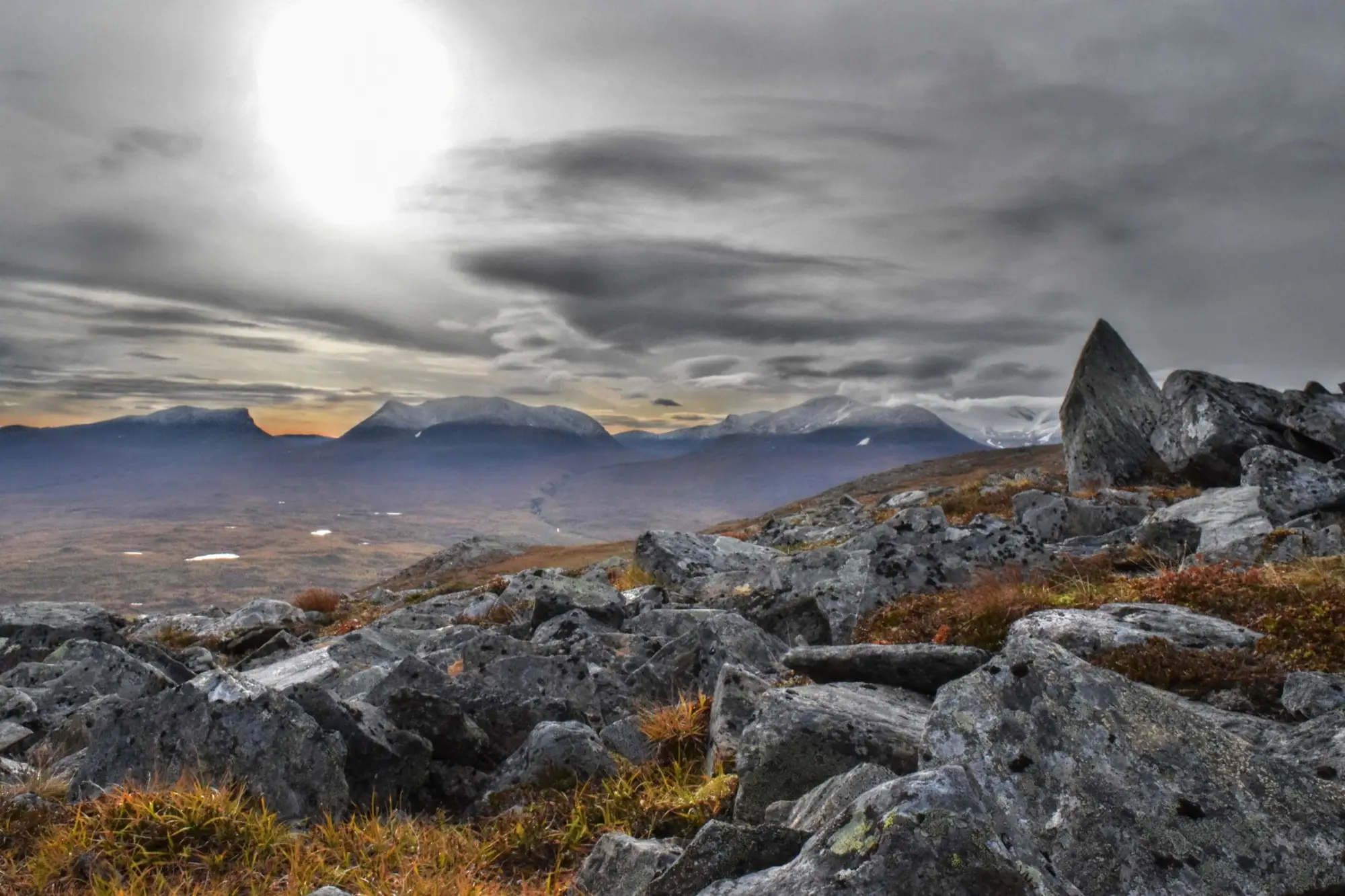

Kiruna is the base for most travel in Swedish Lapland. Icehotel is in Jukkasjärvi, 15 km outside the Kiruna city centre, while Abisko, 93 km from Kiruna, has the national park, the Aurora Sky Station and the start of Kungsleden. The top ten things to do are Icehotel, Abisko National Park and the Aurora Sky Station, Kungsleden, the Kiruna town transformation, Kebnekaise, the Iron Ore Line, Nutti Sámi Siida, the Jokkmokk winter market, Gammelstad church town and Treehotel. If you are weighing cross-border travel, read our comparison of Finnish vs Swedish Lapland.
1. Icehotel in Jukkasjärvi: rebuilt from Torne River ice every winter since 1989
Icehotel began in 1989, when its founder Yngve Bergqvist opened Arctic Hall, an art gallery built from ice and snow, in Jukkasjärvi. Each winter the Torne River freezes, and its ice is harvested and made into the hotel's art and architecture, which takes a new form every year. When the spring sun warms, the hotel and its artworks melt and return to the river, as documented in the Icehotel story.
Icehotel 37 opens on 11 December 2026. The art exhibition is open from 12 December 2026 to 10 April 2027, 10 am to 6 pm. Icehotel 365, a permanent building cooled by solar power, keeps a steady minus five degrees, so the ice art can be seen all year, even in summer. Icehotel is open every day, all year round, and it is cash free. Details on bookings and accommodation are set out in the guide to Icehotel in Sweden: visits and stays. For broader seasonal planning across the country, see Sweden in winter: where to go, December to March.
Icehotel's day ticket for 13 April to 30 November 2026 costs SEK 325 for adults, SEK 225 for students and seniors and SEK 39 for children aged 4 to 12. Entry to Icehotel and the art exhibition is free for overnight guests, and day visitors can buy a ticket on arrival.
Jukkasjärvi is a small village 15 km outside the Kiruna city centre, with about 800 inhabitants. The name Jukkasjärvi means "meeting place by the water" in Sámi. Jukkasjärvi church, which Kiruna Lapland calls the oldest wooden church in Lapland, dates from 1726, with original parts from 1607. For local sky conditions around the village, check the live reports for Kiruna northern lights and monitor daylight in Kiruna.
2. Abisko National Park and the Aurora Sky Station: a chairlift to about 900 metres
Abisko National Park was established in 1909, one of the first in Sweden, and is today the most visited national park in Norrbotten County. Mountains frame the Abisko valley, with alpine meadows, rapids and Lake Torneträsk, Scandinavia's largest mountain lake. Kungsleden (the King's Trail) runs through the park beside the Abiskojåkka river, which rushes through the Abisko canyon into a delta in Lake Torneträsk. For access details across the country, consult the guide to Sweden's national parks: 12 places to visit.
Abisko is 93 km northwest of Kiruna along the E10, just over an hour by car, with daily trains or buses all year. The Aurora Sky Station sits at around 900 metres on Mount Njullá (Nuolja), just south of Abisko and Lake Torneträsk; the summit is about 1,160 metres. You go up by chairlift from the base station, a 10-minute walk from STF Abisko Turiststation; the ride takes about 30 minutes. More route planning appears in Abisko: travel guide, hikes and getting there.
In winter 2026 to 2027 the chairlift and Sky Station open in the evenings from 19 October 2026 to 27 March 2027, 21:00 to 01:00, and advance booking is required. Daytime visits run from 13 February to 26 April 2027, 09:30 to 16:00. A guided night visit to the Sky Station costs from SEK 1,295, the northern lights dinner from SEK 2,395, and a chairlift ticket on your own from SEK 260. Before going, see the live status for Abisko northern lights and check daylight in Abisko when scheduling your ascent.
3. Kungsleden: the King's Trail starts at Abisko, 107 km to Nikkaluokta
Kungsleden runs just over 450 km between Abisko and Hemavan, and the Swedish Tourist Association (STF) set it up in the early 20th century. The train stops daily right opposite Abisko Tourist Station, where Kungsleden begins. Practical stages are covered in the Kungsleden hiking guide: stages and huts.
The northern section, Abisko to Nikkaluokta, is 107 km in 7 stages, and can be done in 5 days. The first stage, Abisko to Abiskojaure, is 15 km, 4 to 6 hours of hiking, and enters Abisko National Park on the first day. STF runs 16 mountain huts along Kungsleden, 10 to 20 km apart, with none between Kvikkjokk and Ammarnäs. The trail passes through four national parks: Abisko, Stora Sjöfallet, Sarek and Pieljekaise, and is well marked, with bridges over difficult crossings. For network context across regions, see Hiking in Sweden: 12 trails, huts and seasons.
For the last two days you leave Kungsleden to reach Nikkaluokta, where buses run to Kiruna. Reindeer herding goes on along the trail, and STF asks hikers to show consideration.
4. Kiruna: a town moving three kilometres east, and the church that went with it
Kiruna is Sweden's northernmost city, and LKAB has mined Kiirunavaara since the beginning of the 20th century. LKAB says it is today the world's largest underground iron ore mine. The new centre is being built three kilometres east of old Kiruna, and roads and railways have already been redirected. The new town hall, Kristallen (the Crystal), was the first new building in the new city centre, inaugurated in 2018. For more background on the relocation project, see Kiruna: things to do and town move guide.
The new city centre has been inaugurated and the old one dismantled, but LKAB says there are still many years of urban transformation left. On 19 and 20 August 2025 Kiruna Church, which weighs 672.4 tonnes and is 40 metres wide, was moved in one piece to a site between the cemetery and the new city centre. It travelled along a specially adapted five-kilometre route, and thousands of people watched. Kiruna Church has been named Sweden's most beautiful building. It is the largest building moved in an urban transformation whose planning began over 20 years ago, because mining is affecting the old site.
The public mine tour goes by bus from the tourist centre into the mountain to LKAB's visitor centre at the 540-metre level, and lasts 3 hours. It costs SEK 590 for adults, SEK 490 for students and seniors 65 and over and SEK 190 for children aged 6 to 15, and advance booking is recommended. You can read broader background on the countrywide phenomena via our overview of the northern lights in Sweden.
5. Kebnekaise: Sweden's highest mountain, 19 km from the road end at Nikkaluokta
Kebnekaise's northern peak, ice-free and with a fixed height of 2096.8 metres, has been Sweden's highest point since 2019. The southern peak is covered by a small icefield whose height changes with the winter snow and the summer melt, and Stockholm University measures it every year. For route specifics to the summit, read Kebnekaise: climbing Sweden's highest mountain.
Nikkaluokta is where the public road ends and the mountain trails begin, about 70 km from Kiruna. From Nikkaluokta it is 19 km of hiking or skiing to STF Kebnekaise Mountain Station; the first 5.6 km to the lake Láddjujávri is easy walking through birch forest. The Nikkaluoktaexpressen bus runs only while Nikkaluokta Sarri and STF Kebnekaise Mountain Station are open; at other times only a taxi gets you there.
In the spring-winter season, which normally runs from the end of February to the beginning of May, daily snowmobile transfers go up to the mountain station.
6. The Iron Ore Line: by night train from Stockholm to Kiruna, Abisko and Narvik
SJ's night train runs between Stockholm and Narvik, so you can sleep part of the way to Kiruna. Check SJ for current journey times and timetables. You choose a seat, a sleeping car berth or, in first class, your own compartment with shower and toilet.
Narvik is LKAB's gateway to the world, where iron ore from Kiruna arrives on the Malmbanan and Ofotbanen lines and is loaded onto ships. The railway from the Kiruna mine to the ice-free harbour at Narvik was built a few years before Abisko National Park was founded in 1909. The train stops daily right opposite Abisko Tourist Station, where Kungsleden begins. In Kiruna, free shuttle buses link the city centre and the station for every train arrival and departure, every day of the year.
7. Sámi culture: Nutti Sámi Siida and the reindeer herders of Jukkasjärvi
Kiruna is part of Sápmi (the Sámi homeland) and has been home to Sámi for many generations. The Sámi are one of the world's indigenous peoples, and their traditions and culture are still very much alive. There are eight Sámi communities in Kiruna; a Sámi community is an economic association whose members work with reindeer herding. The main Sámi language around Kiruna is Northern Sámi. For wider heritage contexts across the north, explore Sámi culture in Sweden: 8 places to experience it.
Nutti Sámi Siida was founded by Nils Torbjörn Nutti, a Sámi reindeer herder from Saarivuoma sameby (Sámi community), and his partner Carina Pingi from Gabna sameby. It grew out of feeding their reindeer in corrals in the winter of 1996, together with the nearby Icehotel, and the company was set up in 1999. A siida is a traditional Sámi winter group.
Nutti Sámi Siida is a Sámi tourism company in Jukkasjärvi that runs nature and culture experiences based on Sámi culture and has lodging close to reindeer. Its Márkanbáiki is an open-air museum about Sámi culture and a nomadic life lived by eight seasons. In spring the herd is moved away from Jukkasjärvi, and in summer most of it is in the mountains, though some reindeer are always at the museum. Reindeer herding goes on along the trail, and STF asks hikers to show consideration in reindeer herding areas.
8. Jokkmokk winter market: the 422nd market, 4 to 6 February 2027
The 2027 Jokkmokk market, the 422nd, is held from Thursday 4 to Saturday 6 February 2027. According to the official Jokkmokk market schedule, the market area is open Thursday to Saturday from 10:00 to 18:00, with activities all week, evenings included. The programme of seminars, exhibitions, concerts and theatre is usually ready in December. For visitors travelling inland for the event, local aurora updates are tracked at Jokkmokk northern lights.
9. Luleå: Gammelstad church town, on the UNESCO list since 1996, and 1,312 islands
The Church Town of Gammelstad in Luleå was inscribed on the UNESCO World Heritage List in 1996. UNESCO calls Gammelstad the best-preserved church village, a kind once found across northern Scandinavia, whose houses were used only on Sundays and festivals by worshippers from the countryside. It has 520 protected buildings, 404 church cottages divided into about 552 chambers and 116 other buildings.
The Luleå archipelago has 1,312 islands and is part of the world's largest brackish water archipelago. In winter many kilometres of ice roads are ploughed across the archipelago, for visitors and residents alike. The archipelago ferries run in summer and autumn. You can track evening sky conditions near the coast using Luleå northern lights.
10. Treehotel in Harads: rooms in the trees, 35 minutes from Boden station
Treehotel was founded in 2010 by Kent and Britta Lindvall and since 2022 has been owned by Jonas Olsson and Hannah Wennebro Olsson. Treehotel is at Edeforsvägen 2 A in Harads. Each tree room has its own architect, among them the Mirrorcube by Tham & Videgård, the Biosphere by BIG and the 7th Room by Snøhetta. To see how these far-northern stops fit into a broader Swedish itinerary, consult our guide to things to do in Sweden: 20 key experiences.
Treehotel recommends the train; the closest station is Boden C, about 35 minutes away. By air, the flight from Stockholm to Luleå takes 70 minutes, with several SAS and Norwegian departures a day. The hotel arranges transfers from Luleå Airport, about 1 hour 10 minutes away.